This post was originally written in 2015 as part of a guest posting series. Ten years later, and as part of World Mental Health Day in 2025, I’ve updated it to provide an update on where I am now.
Trigger warning – If you are currently experiencing agoraphobia or are in being in the process of being diagnosed with agoraphobia I would advise to either stop reading here or take care while reading. There is information in this article that can be triggering and potentially harmful for your condition. This is an informative piece to advise on the symptoms I experience and where I experience them.
Agoraphobia is a panic disorder, which means when the sufferer is in an environment or situation that they feel could become difficult or embarrassing to escape, they have a feeling of fear and ultimately this ends up as a anxiety attack. For myself, I usually feel extremely hot, dizzy or ‘spaced out’ and feel I need to get out of the situation as quickly as possible. I also feel like I need to be holding on to something or someone so I won’t fall. Falling is my main fear or being ill, which in turn has impacted my eating habits and now I make sure I am carrying water when on any journeys.
The places I feel this anxiety have been long journeys on trains, London underground and in tunnels, on bridges any large open spaces like parks and beaches, car parks, crossing large roads, supermarkets, shopping centres, bridges, roads on bright days that have bright surfaces that reflect (yes it really gets that detailed!) train stations and airports.
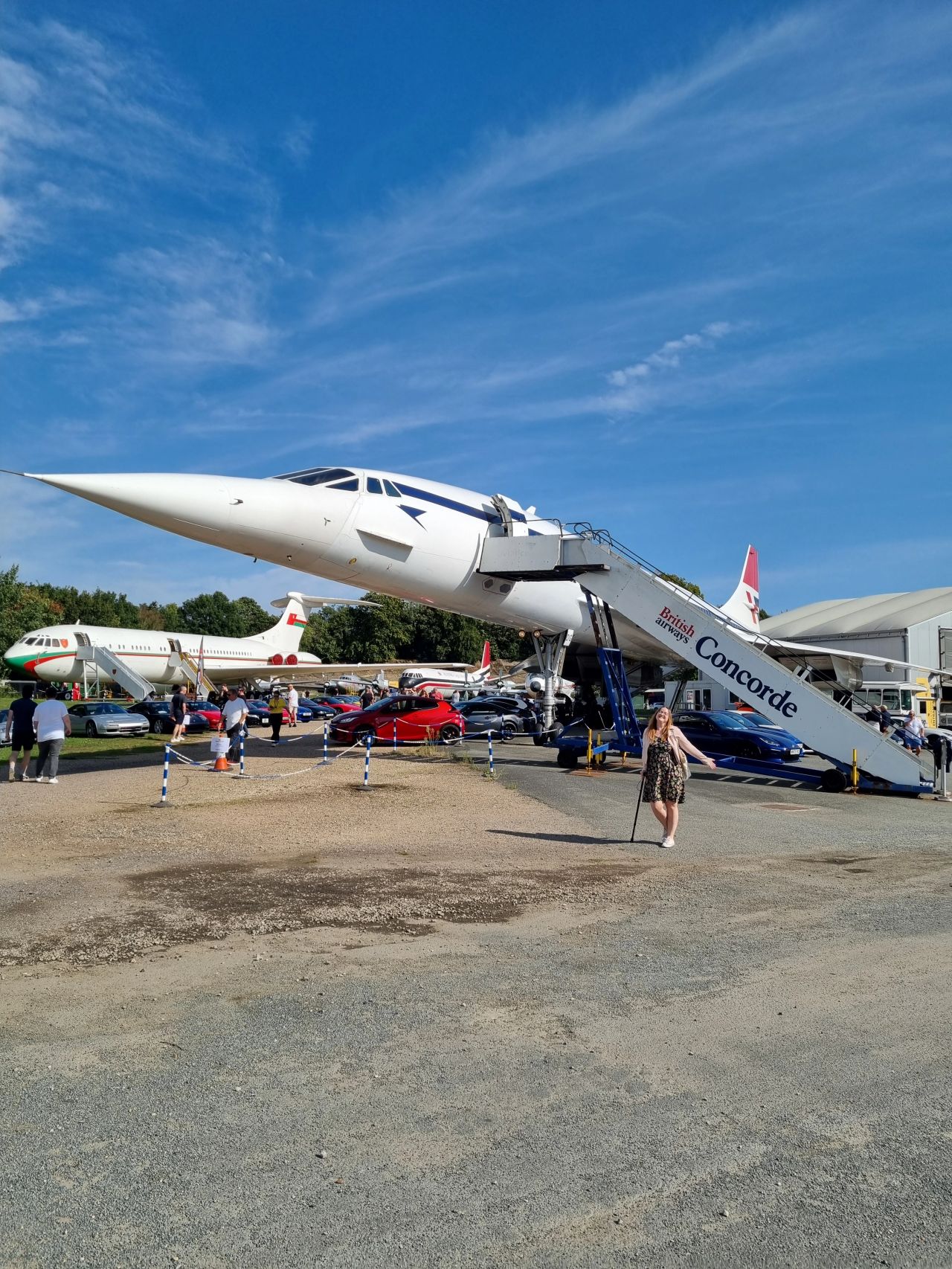
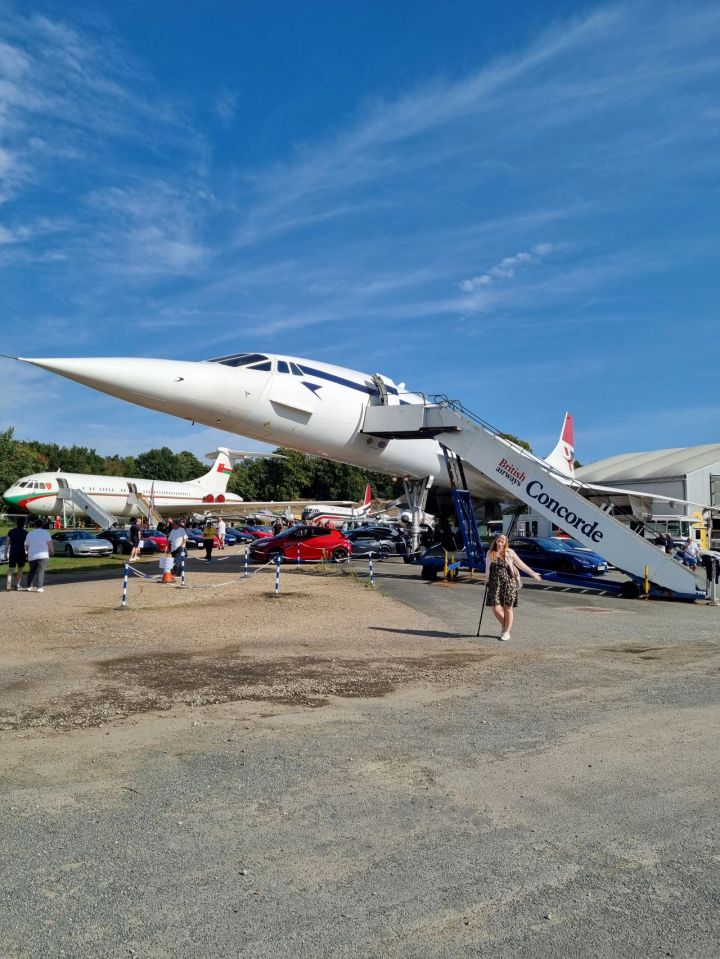
Working in aerospace, I love anything aviation related, but the space around the aircraft can cause me to have severe panic symptoms. I may look happy and smiley (as usual!) on the outside here, but my fight or flight response is definitely kicking in and I can only stop long enough for a quick photo.
Before January 2011 I had no previous experience of agoraphobia, as any sufferer will tell you it does literally just come out of the blue. Due to a traumatic circumstance I had to visit A&E, where I was told to keep an eye on my appendix as it was very sore. I was written off work and I went back to stay with my mum in Kent. Eventually, I decided to go back to Southampton, where I live and work, to recuperate at home. When I got off the train at London Victoria I felt weak and sick and felt as though I needed to sit down straight away otherwise I would faint. I managed to get back to a station that my mum was able to collect me from and she took me straight to another hospital where they diagnosed me with post viral fatigue (which in 2025 now feels a bit like a foreshadowing to my M.E/Chronic Fatigue Syndrome diagnosis last year!). It was at this time I had strong muscle pain in my legs, something which I realise now could have psychologically been linked to not wanting to walk very far from my house, the place that I felt safest. The pain was so bad I struggled to walk to the end of the road without feeling exhausted and I would struggle to get in and out of the bath or shower. So after I returned to Southampton, I went back to work and slowly resumed my usual daily routine.
I found with this routine suddenly some things were getting harder to do. I would feel panic walking down empty aisles in supermarkets, when crossing large main roads and walking through empty car parks. I shrugged this off as nothing but it continued to worsen, leading to me having to change my usual route to work because I couldn’t walk down a stretch of road as it seemed too ‘open’ to even think about walking down. Avoidance of these spaces and situations is key to agoraphobia, and is what causes the condition to worsen, until you are eventually fearful of even leaving the house. Eventually, after moving house I decided it was the right time to go and see a new GP about my problem. I had initially looked it up on the internet but thought there would be no access for treatment and therapy or even hypnotherapy seemed to be a costly option. It was after over a year of frustration and fear that I was eventually diagnosed as agoraphobic.
I started a course of counselling in Summer 2012, that fitted in around my work schedule. I was given a variety of options, CBT being one of them which is cognitive behavioural treatment. This includes exposure, that is centred around a hierarchy that I have worked on from the most feared situations to the least feared and every week a new fear has been tackled. Obviously a lot more has been involved in these weekly sessions that I won’t divulge into, but if you have any questions please feel free to ask me.
I have told this story to various doctors over 8 times now, as many were seemingly unable to diagnose agoraphobia, sending me for countless blood tests. It is only when I moved and visited a new GP that he told me to self-refer to a counsellor who gave me regular CBT treatment over 6-8 weeks. She was wonderful and inspired me to gain my confidence in walking through those places that I fear the most using a hierarchy strategy.
Unfortunately in April 2014, around 6 months after I had initially moved to London my condition worsened due to significant stress levels. I was put on a course of anti-depressants to control my anxiety which I had a severe reaction to and was referred back to therapy. This was my lowest point where I felt that I could not leave the house without feeling anxious and I had to be accompanied everywhere I went. The effect that the medication had was absolutely terrifying but my body just reacted badly to it and it is certainly not the same for everyone. I haven’t been able to take any anti-depressants since.
I went for weekly sessions with a therapist at a hospital in London where they treated me with CBT. We discussed the various triggers and completed a few ‘field’ trips in large shopping centres to get me used to the open space. We also tackled my fear of escalators which seemed to have emerge after my relapse. Upon reflection in 2025, this was the most beneficial treatment I had, and sadly one that is unlikely to still be happening due to limited funding for mental health support in the NHS
So now we are in October 2025 and I have realised on my journey that recovery happens in waves, it’s not a linear process. The pandemic was a big set back in my recovery, as someone with agoraphobia being told you have to stay in your safe place at home is heavenly for your condition, but the longer you stay there, the harder it is to leave. I was diagnosed with Generalised Anxiety Disorder following this, as I started to have severe anxiety attacks before any travelling, including to my workplace and holidays. It was the first time since my severe reaction that I started to take Diazepam, but only in very severe attacks. In 2023 I self referred for some more therapy but this time it was much more focused on my generalised anxiety disorder. I still haven’t been able to find a therapist in my area that has any experience of agoraphobia – but I hope one day I can. It has been a long journey to get to this point. I still have to plan every journey and avoid going on the tube if I can. I still avoid high escalators opting for the lift or stairs instead (which I now have to do for my physical health issues anyway) and very large open spaces. I have been through the longest tunnel in Europe – so that definitely helped with some exposure therapy!
It is difficult for many to understand agoraphobia, because it’s difficult to describe a fear and frustration of not being able to do something that is seemingly so simple. I walk round our local supermarket looking at people thinking – but how are you so relaxed in this environment? I don’t think there has been a therapy session I have had where I haven’t felt emotionally drained because it really is that exhausting, and to put it simply, all because I can’t walk to the back of a supermarket to pick up a yoghurt.
The sad thing is that so many people are suffering in silence. Agoraphobia, if left untreated, can leave you housebound. This was something that I had to ensure would not happen to me and something that I have kept as a goal over the past 14 years. My latest exposure therapy is to ensure I get outside at least once a day. I walk round my garden or we go to get coffee and I’m sure it’s helping me get to a healthier place. If you are experiencing agoraphobia, or would like to learn more about it please do reach out.
There is no certainty that my panic disorder won’t return to high levels in the future. It could come on just as suddenly, but hopefully I will now have ways to handle the fears and will be able to control it.
 Rebecca Thi